Medieval origins of religious life in Kotor (9th–12th centuries)
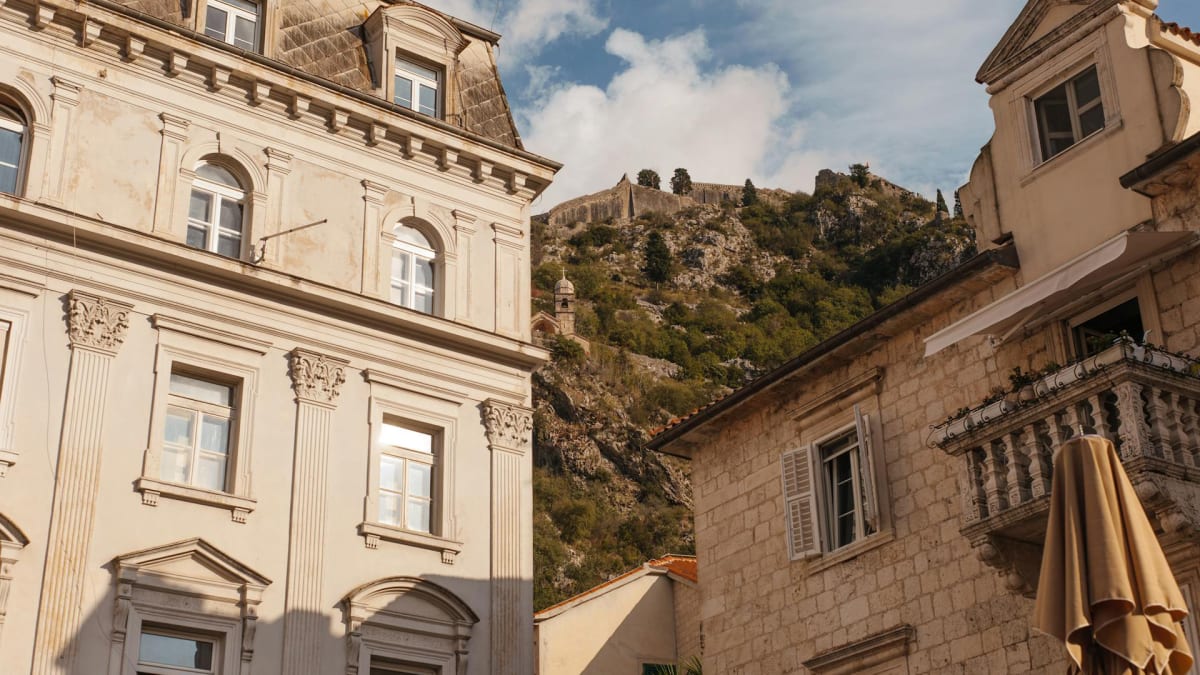
The religious landscape of Kotor Old Town took its definitive shape during the medieval period, when the town emerged as a fortified urban centre and an established episcopal seat on the eastern Adriatic. By the ninth century, Kotor functioned as a bishopric, placing ecclesiastical authority at the core of urban governance and social organisation. This institutional status shaped not only religious hierarchy but also the physical structure of the town, embedding churches directly into the street network within the walls.
Unlike settlements with clearly separated sacred precincts, medieval Kotor developed without a distinct ecclesiastical quarter. Churches, monastic buildings, and charitable institutions were interwoven with residential and commercial structures, reflecting the central role of religion in everyday urban life. The unusually high density of churches within the Old Town is a direct consequence of this early medieval pattern, established between the ninth and twelfth centuries and preserved despite later political and architectural change.
The medieval period also established a hierarchical religious system. A central cathedral exercised episcopal authority, while a network of parish, collegiate, and monastic churches served neighbourhood and specialised functions. This structure created a coordinated ecclesiastical landscape rather than a collection of independent religious buildings, a framework that continued to define religious life long after the medieval period ended.
Episcopal authority and Saint Tryphon’s Cathedral (12th century onward)
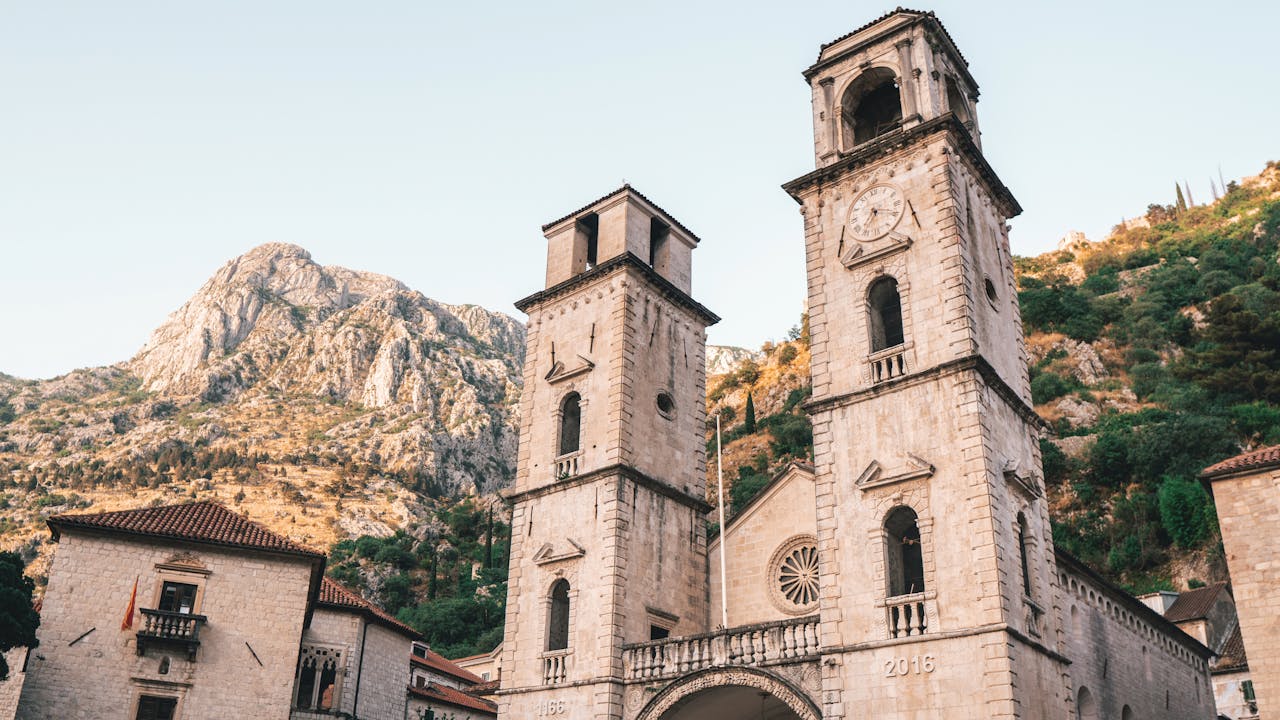
At the centre of Kotor’s medieval religious system stands Saint Tryphon’s Cathedral, consecrated in 1166. Constructed to house the relics of Saint Tryphon, which arrived in Kotor in 809, the cathedral confirmed the town’s position as a major ecclesiastical centre on the Adriatic. As the seat of the Roman Catholic Diocese of Kotor, it functioned as both a spiritual authority and a civic symbol, closely tied to the identity of the medieval commune.
Architecturally, the cathedral was conceived on a scale unmatched by other churches within the town. Its Romanesque core reflects twelfth-century construction traditions, while later Gothic and Baroque elements resulted from rebuilding after earthquakes. Despite repeated interventions, the cathedral retained its institutional role throughout the medieval and early modern periods, anchoring the surrounding network of churches and defining religious hierarchy within the walls.
The dominance of the cathedral shaped the character of other religious buildings in the Old Town. Parish and monastic churches were not intended to rival it in scale or prestige, but to serve local devotional, educational, and charitable roles within a system governed by episcopal oversight.
Early medieval and collegiate churches
Among the oldest ecclesiastical sites in Kotor Old Town is Saint Mary Collegiate Church, traditionally associated with Benedictine influence. Its collegiate status distinguished it from ordinary parish churches and indicates an important liturgical function within the medieval town. Although rebuilt multiple times due to structural damage and changing architectural preferences, the church has preserved continuity of worship on the same site from the medieval period onward.
Saint Luke’s Church, built in 1195, represents one of the most important survivals of early medieval religious architecture in Kotor. Its significance lies not only in its age but also in its later history. From the late medieval period, the church served both Roman Catholic and Orthodox rites, often simultaneously. This arrangement developed gradually and reflects long-standing confessional coexistence shaped by demographic change rather than conquest or institutional rupture.
The presence of such shared sacred space illustrates how medieval religious life in Kotor adapted pragmatically to social reality. Rather than creating parallel systems, communities made use of existing structures, preserving continuity of sacred space while accommodating different liturgical traditions.
Parish churches and neighbourhood worship
The medieval religious network of Kotor Old Town was sustained by a series of small parish churches embedded within residential areas. Saint Paul’s Church and Saint Anne’s Church exemplify this type of neighbourhood worship space. Modest in scale and architectural expression, these churches served local communities and played a central role in maintaining daily devotional life within the walls.
Such parish churches were typically supported by local families, confraternities, or small endowments rather than major ecclesiastical institutions. Their survival across centuries reflects the stability of parish organisation in Kotor and the close relationship between religious practice and urban neighbourhood identity.
Together with larger churches, these smaller buildings contributed to the dense ecclesiastical fabric of the Old Town, ensuring that religious life remained geographically and socially accessible to the medieval population.
Monastic life and institutional change
Monastic communities formed an essential component of Kotor’s medieval religious and social structure. Saint Clare’s Church is associated with a former convent, highlighting the presence and importance of female monasticism within the Old Town. Such institutions contributed to education, charity, and care for vulnerable members of society, reinforcing the Church’s role beyond purely liturgical functions.
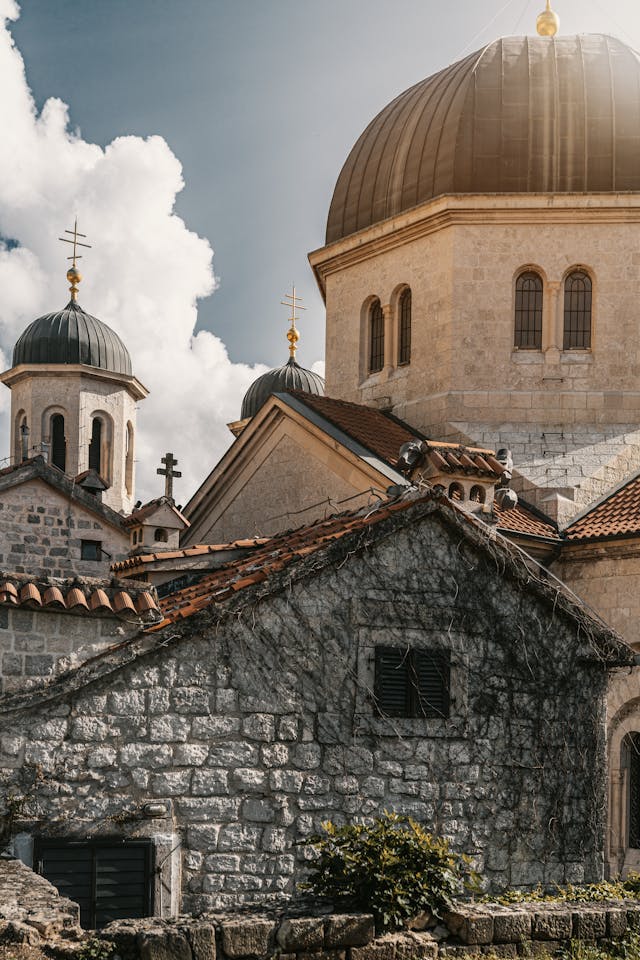
Alongside Saint Clare’s Church, other religious buildings connected to monastic or semi-monastic traditions illustrate differing institutional outcomes. Saint Michael’s Church, originally associated with monastic life, gradually lost its religious function as ecclesiastical priorities shifted and religious communities were consolidated or dissolved. Saint Anne’s Church and Saint Paul’s Church, while not monastic institutions, occupied a related position within the religious economy of the Old Town, serving local devotional needs and remaining in use through successive periods of adaptation rather than formal institutional patronage.
Saint Michael’s Church reflects a different institutional trajectory. Originally linked to monastic life, it gradually lost its religious function as priorities shifted and monastic institutions declined or were consolidated. Rather than being demolished, the building was absorbed into the evolving urban fabric, illustrating a broader pattern of reuse that characterises several former religious sites in Kotor.
These examples demonstrate how religious buildings in the Old Town were adapted to changing social and institutional needs while preserving their historical presence within the urban landscape, even as their original functions diminished or were redefined in response to wider urban and administrative transformation across the late medieval and early modern periods.
Military pressure, invasions, and religious continuity
From the medieval period onward, Kotor was exposed to repeated military pressure arising from regional conflict and shifting political authority. Byzantine, Serbian, Hungarian, and later Venetian rulers exercised control over the town at different times, while Ottoman expansion in the surrounding hinterland created sustained external threat from the fifteenth century onward. These pressures affected the town’s economy and infrastructure but did not result in the imposition of new religious systems within the Old Town.
There is no evidence that invading forces introduced alternative religions or systematically replaced existing Christian institutions in Kotor. Crucially, the town was never permanently occupied by Ottoman forces, and as a result it avoided the religious transformations experienced by many inland centres. Churches were not converted into mosques, nor is there evidence of deliberate religious desecration driven by confessional conflict.
The impact of military pressure on religious life was instead material and institutional. Churches suffered damage during sieges and periods of instability, while monastic communities experienced economic decline due to disrupted landholdings and patronage. In some cases, religious buildings were temporarily abandoned or later repurposed, reflecting practical adaptation rather than religious rupture.
Venetian rule and Baroque reconstruction (15th–18th centuries)
Venetian rule, established in 1420 and lasting until 1797, brought a long period of relative political stability to Kotor. During this time, Roman Catholic institutions were reinforced administratively, while Orthodox worship continued under negotiated conditions. Earthquakes in 1537 and 1667 caused widespread damage, prompting extensive rebuilding across the Old Town.
Reconstruction campaigns during the Venetian period introduced Baroque elements while preserving medieval foundations and spatial orientation. Saint Joseph’s Church belongs to this phase of transformation. Built over an earlier sacred structure and incorporating material from a demolished monastery, it exemplifies adaptive reuse within the Old Town. Its bell tower houses the oldest known bell in Kotor, cast in Venice in 1461, providing a tangible link between Baroque reconstruction and medieval religious continuity.
The churches rebuilt or modified during this period form a significant part of what is today classified as religious sites within the historic town, reflecting layered architectural and institutional development rather than stylistic uniformity.
Orthodox worship and the Serbian Orthodox Church (19th–20th centuries)
Orthodox worship was present in Kotor throughout the medieval and early modern periods, but it gained formal institutional expression in the modern era through the Serbian Orthodox Church. This development reflected broader political changes following Venetian and Austro-Hungarian rule, as well as demographic movement from the surrounding region.
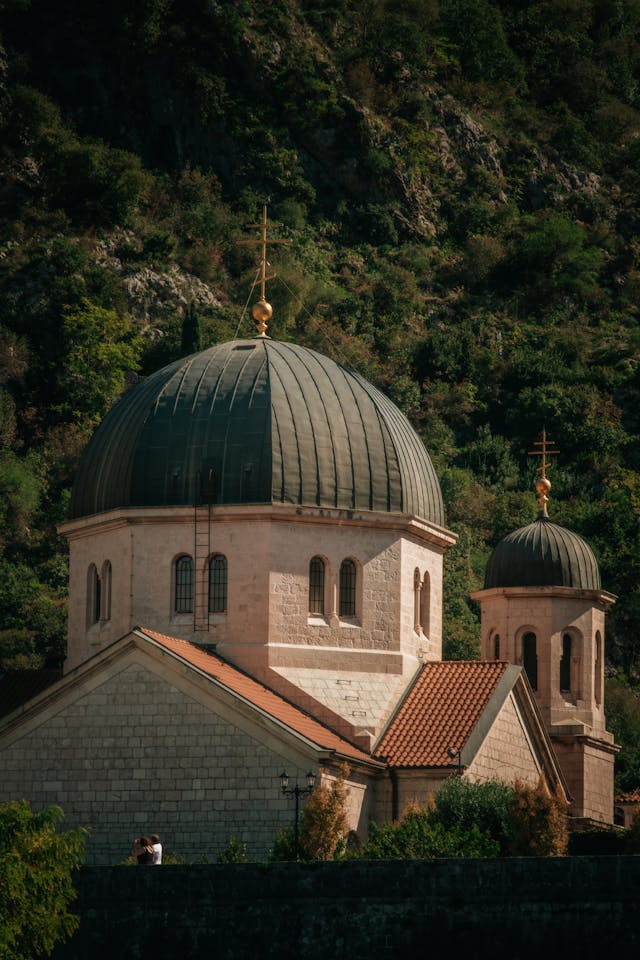
Saint Nicholas’ Church, constructed in the early twentieth century on the site of an earlier church, represents this transition. As the principal Serbian Orthodox church in the Old Town, it marked the formal recognition and visibility of Orthodox religious life within the historic urban core. Its scale and architectural language distinguish it from medieval churches, yet its location within Kotor Old Town maintains continuity with established patterns of worship and sacred space.
Churches of Kotor Old Town today
Taken as a whole, the churches of Kotor Old Town form a tightly integrated religious landscape shaped by medieval episcopal authority, parish organisation, monastic life, and later institutional adaptation. Their close physical proximity reflects an urban model in which sacred space was embedded directly into civic and residential life rather than separated from it. Over successive centuries, political change, demographic movement, and natural disaster altered individual buildings, yet continuity was preserved through reconstruction, reuse, and negotiated coexistence. The result is not a static collection of monuments, but a living historical record in which architecture, worship, and social function evolved together within the constraints of a fortified medieval town.